





October 15, 2020
Does Size Matter?
With technology and specialty advancements, does size matter as much as perhaps it once did?
Moving forward, we will find that - acquisition will drive us to scale up, then technology will allow us to scale down. In order to facilitate growth - we will experience this ebb and flow more and more often.
Given the current re-shoring climate, US shops will benefit from a reduction in outsourcing. Domestic shops will do domestic work. While labor costs (regardless of global location) will decrease as automation increases - the impact will be less significant since labor cost was the primary directive for outsourcing in the first place.
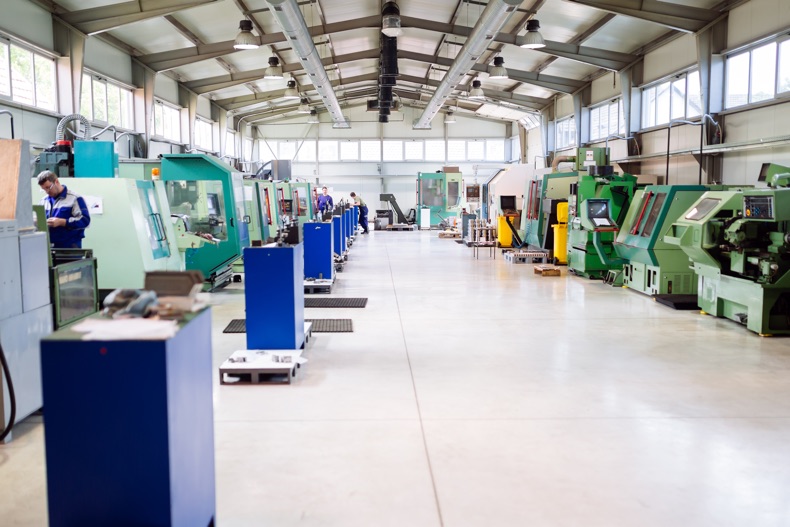
Some suppliers rising to meet new opportunities will look different from shops today. Some (shops) larger, some smaller.
Here a few points to consider with regard to both shop-size formats:
Larger Shops:
Acquisitions will increase - however, this is difficult to forecast. There are various drivers of acquisition. On the buyer side, businesses already in or reliant on manufacturing see the chance to scale more quickly than organic growth would permit. Meanwhile, digital technologies are making it easier to coordinate procedures, systems and even relationships across separate sites. And on the seller side, demographics — owners looking to retire — are the leading factor. In the future, we will take it for granted that a seemingly separate shop is often an outpost of a larger manufacturing organization, with sibling shops ready to support it and owners and executives based elsewhere.
Smaller Shops:
Meanwhile, shops are also trending smaller. There have always been very small startup shops run by the owner, but in the past these shops have had to add people in order to grow. Today, the one-person shop (perhaps with some part-time help) can deliver greater output than in the past, and can do much more sophisticated work than such a facility could before thanks to automation such as five-axis machining and robotics, which have become much more accessible to small users. The one-person shop can stay one-person farther into its journey, and can find enough work to thrive through relationships with a relatively small number of customers nearby. In the future, an increased share of tooling, prototyping, replacement parts and short-run production will come out of these very lightly staffed businesses plugged into customers in their immediate region.
The implication of these developments is that the independent, standalone, midsize job shop — the heart of machining work for decades — will be crowded from both sides. Large machining organizations built out of multiple shops will be able to support large orders from major companies and in many cases serve them as single-source providers. Local, sophisticated, single-person or very small shops will be able to respond nimbly to companies’ small, unpredictable needs. How will the job shop as we recognize it today compete? A final development to watch in this area is that job shops won’t sit still. These are innovative businesses, and many will find new answers — specialization in particular niches perhaps — that will allow them to continue thriving.
Small and large shops each have a place depending upon their value proposition and focus. While larger shops typically mean larger runs, smaller shops can live off the smaller, more specialized projects that - can lead to the larger volume runs as they grow their reputation and capacity.
In many cases, large volume programs equate to lower profit margins on a per piece basis. Smaller - niche jobs can be more costly to develop but can also yield greater profit margins.
When trying to become a large shop, a key issue (after funding of course) that many shops encounter is finding and retaining the correct employees at the proper skill-level necessary to operate these very expensive machines. In addition to grouping by equipment and job types, machinist skill level also needs to be taken into consideration. The biggest asset any company can have right now is its people. Your people are what’s going to help you survive and make the future. So figuring out how to utilize everybody’s skill levels and continuing to develop and enhance those skill levels is the biggest challenge. Equipment’s easy to buy. It’s hard to get the skill level to run the equipment to the efficiency it’s designed for. This consideration - due perhaps to location, competition for skilled employees or other factors can indeed tighten the growth curve from a small shop to a large shop.
In today's modern machining environment - the technical advancements made in the past decade alone (largely speed of operation) has given the smaller shops the ability to not only compete, but thrive in categories whereby the big-shops used to once dominate. After all, what is it that we are actually selling? Time.
There is no definitive answer to the age-old question - is bigger better? Sometimes - yes and sometimes - no.